
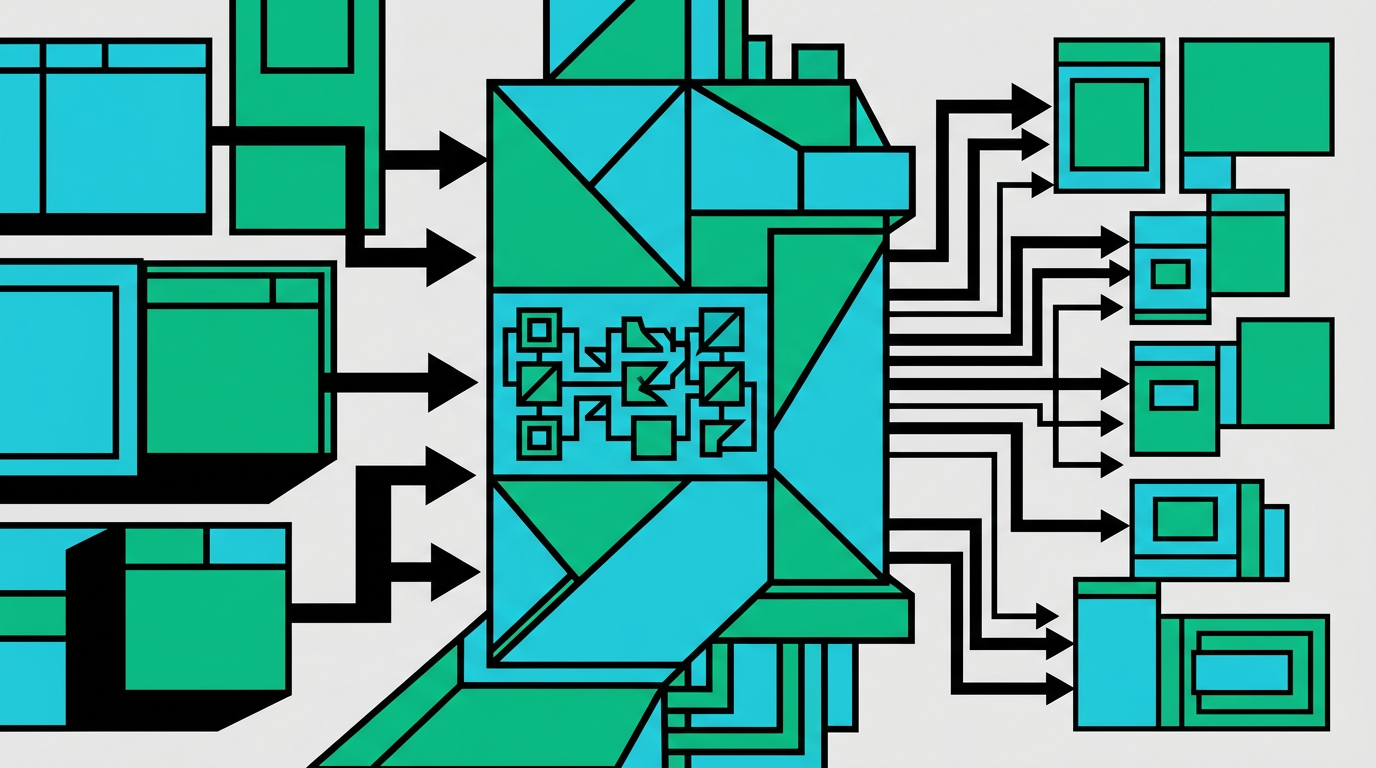
Conditions verified before publish
Promotion scenario
Join a promotion only when price stays under control.
The system checks promotion terms, the allowed price range and participation scenario before publishing, not after profit is lost.
Pricing autopilot for marketplaces
通过策略化自动调价,保持竞争力并保护利润。. This is not another settings screen. It is one operating surface where market signals, pricing rules, guardrails and publishing are gathered together.
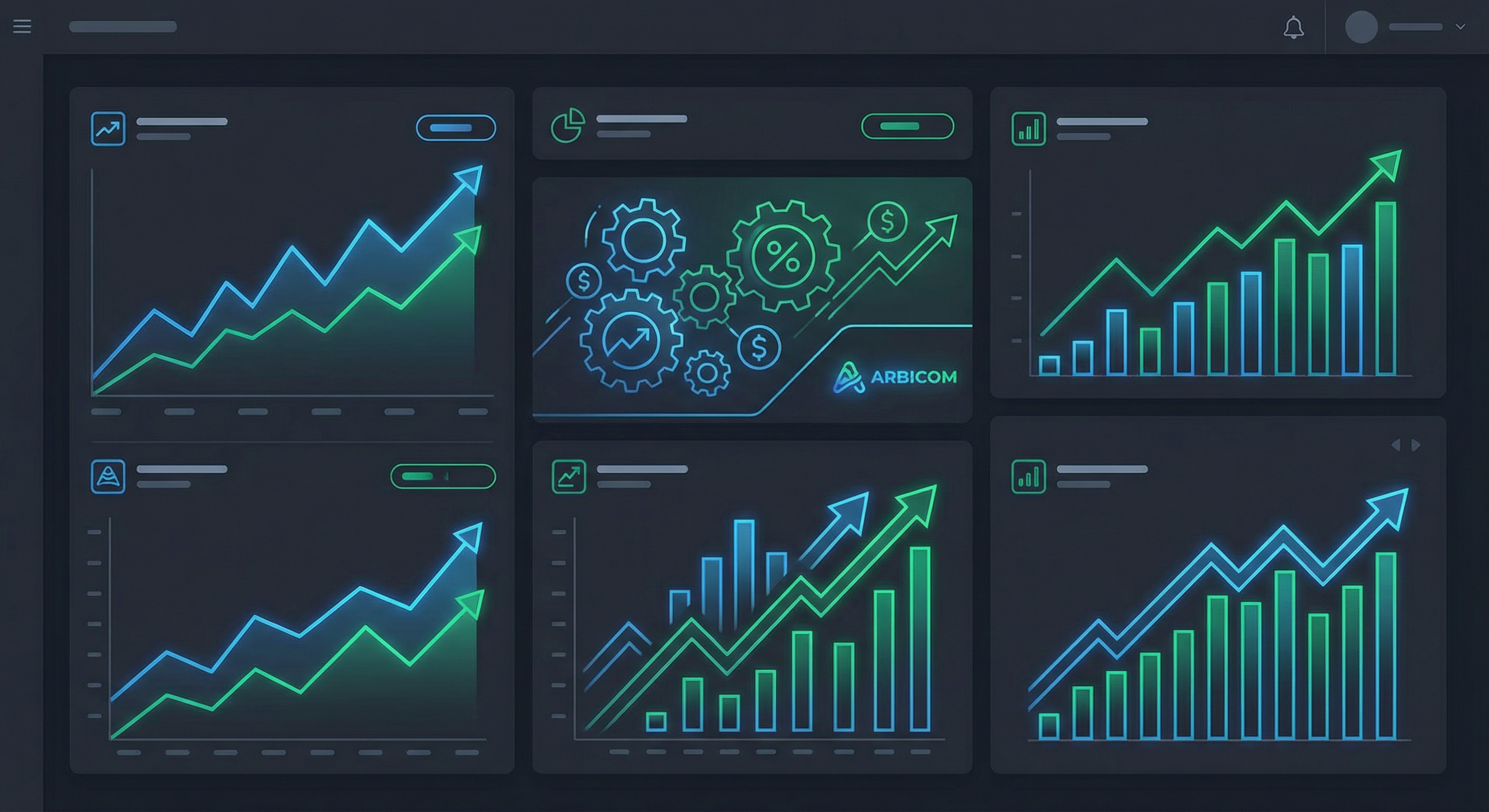

The system quickly validates promotion terms, safe price and allowed participation scenario.
Strategy architecture
Automation is only part of the job. The repricer should feel like a clear control system where signals, limits, modes and publishing are gathered into one logic.
No race through spreadsheets: the system reads the input, calculates the boundary and publishes the decision in sequence.
Promotion scenario
The system checks promotion terms, the allowed price range and participation scenario before publishing, not after profit is lost.
Profit boundary
Safe price, range limits and exit rules work as one contract that keeps the marketplace from pushing the product below margin.
Catalog scale
The team changes modes centrally instead of babysitting product cards during demand spikes.
Reaction speed
Stock, median, timing and promotions read as one operating loop, not a set of disconnected screens.
Operator surface
Modes, signals and critical limits are visible instantly, so the interface feels like an operating panel instead of another form.
Why manual pricing breaks
minutes to validate live promo conditions without manual babysitting.
A premium repricer is not just an automation tool. It has to read like a reliable control loop: fast, wide and predictable for the team.
A repricer has to see the safe price boundary before the marketplace forces the product into a bad discount.
The team should manage exceptions, modes and tolerances instead of rewriting prices across the whole catalog by hand.
ARBICOM pulls stock, median, time windows and promotion rules into one continuous decision loop.
Key product scenes
That is why the landing is built as a series of full-width product scenes: overview, connected catalog and rules editor with explicit profit protection.
Command center
The primary surface does not hide the important state inside tiny tables. It shows market state, signals and active scenarios as one management rhythm.
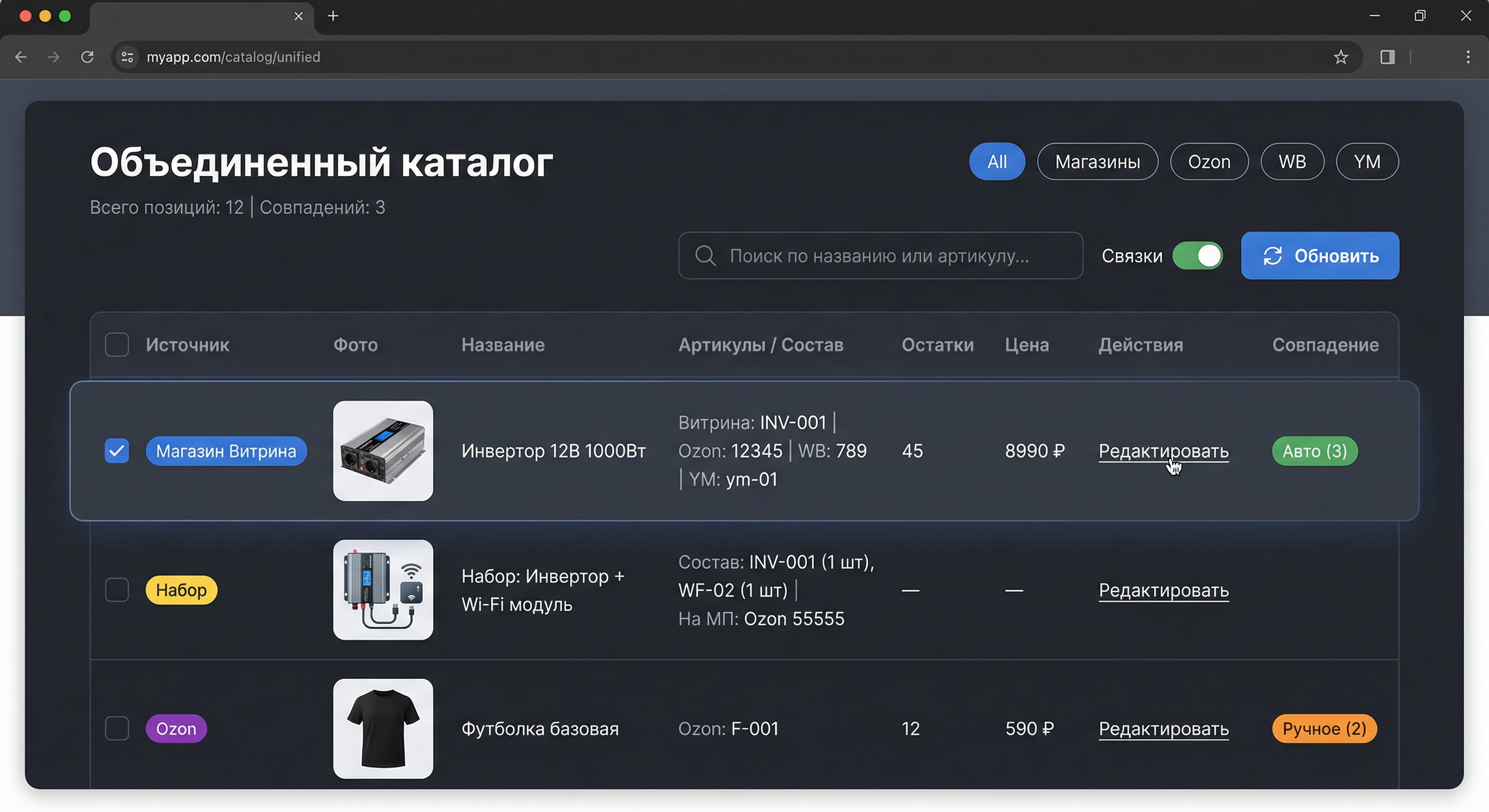
Catalog graph
This is not about pretty UI. It keeps automation from dissolving into manual exceptions as SKU count grows.
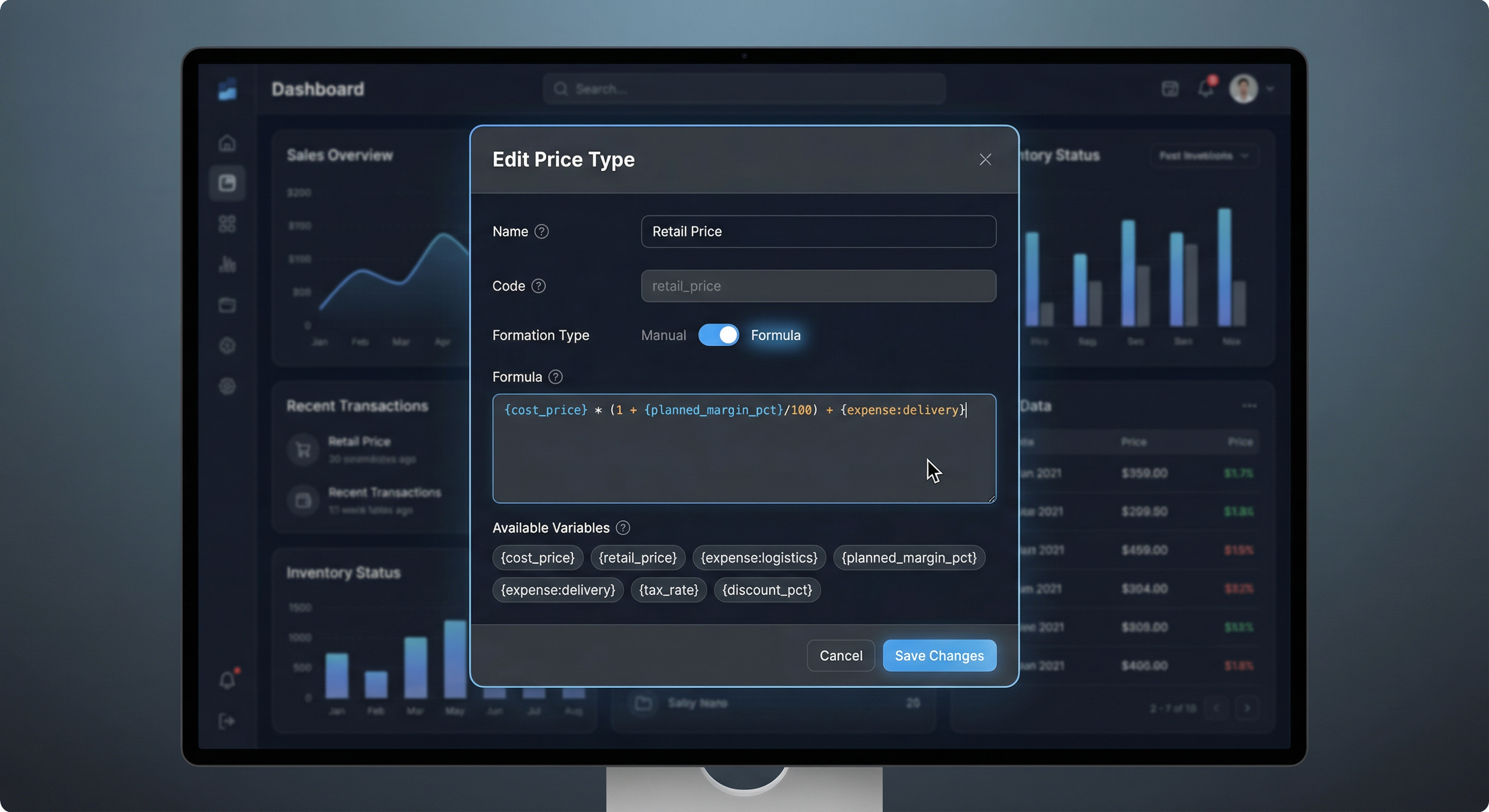
Rules editor
The rules editor turns team decisions into a product contract: what is allowed, when to enter, where to cap price and how to protect profit.
Decision loop
The landing should make this obvious: market read, validation, publishing and profit control form one transparent operating loop.
Collects stock, median, time windows and promotion rules.
Checks the allowed price range, margin, tolerances and participation rules.
Automatically joins, holds or exits a product without manual routine.
Product breakdown
Start with a concise overview, then open the full breakdown of flows, limits, and common questions.
Stock, time, promotion, delta and fixed price strategies work as one decision system.
Auto-entry and auto-exit stop the marketplace from forcing products below margin during a live promotion.
The team manages rules and exceptions instead of hand-editing prices across thousands of SKUs.
Final call to action